Found by the right guests, and only them
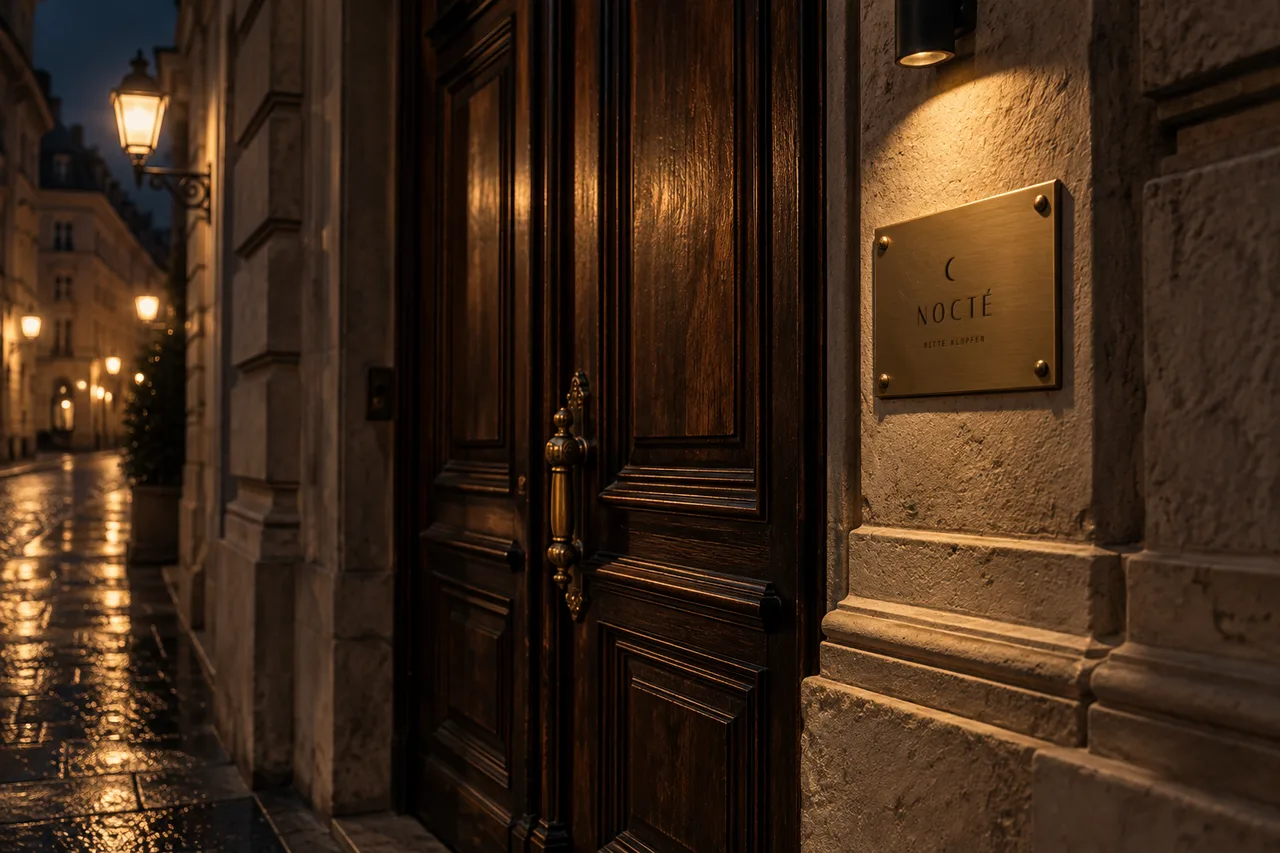
NOCTÉ is a 32-seat bar in Vienna behind a door with no sign. The door was part of the appeal, until guests could not find it and walk-ins waited outside in the cold.
Discretion is not the same as invisibility
Many hidden venues confuse the two. They avoid a sign, a website and listings, and hope word of mouth will do the rest. It does, for a while. Then reservations pile up on one phone line, the door becomes a puzzle, and the people who do find it are not always the ones the room was made for.
The aim for NOCTÉ was to stay quiet in the street and be precise everywhere else: easy to find for someone already looking, of no interest to someone passing by.
Visibility, placed carefully
- Directions, not a sign. The website tells booked guests exactly which door to knock on. A small brass plate is the only mark outside.
- Time slots. Ninety-minute bookings ended the queue at the door and gave the team a room they could plan.
- One page per season. The menu changes four times a year. Each one lives on the site, then moves to an archive, so the page people search for and share is always current.
- Consistent listings. The name, hours and booking link match everywhere the bar appears, from maps to guides.
Let the details do the talking
A quiet place is remembered through small things: a coaster, a matchbox, the etched glass, a reminder email written in the same low, dry voice as the menu. These are what guests photograph and pass on, and they carry the brand further than a sign would.
For a discreet venue, the question is not how to be seen by more people. It is how to be found by the right ones.
The same applies to private dining rooms, members' clubs and appointment-only boutiques. Decide who should find you and what they should already know when they arrive. Make that path clear, and leave the rest in the dark.
See the full case: NOCTÉ, identity, menus and website for a 32-seat bar.