The sample box: letting clients touch the proposal
A proposal for a terrace, a kitchen or a house describes stone, wood and fabric in words and pictures. The client is asked to spend a great deal on materials they have never touched. A box of samples changes that conversation.
Screens flatten materials
Travertine, oiled oak, linen and brushed bronze look much alike on a laptop and completely different in the hand. Colour shifts from screen to screen. Texture disappears. Clients hesitate, ask for more photographs, and compare a carefully chosen material with a cheaper one that looks the same in a PDF.
What to put in the box
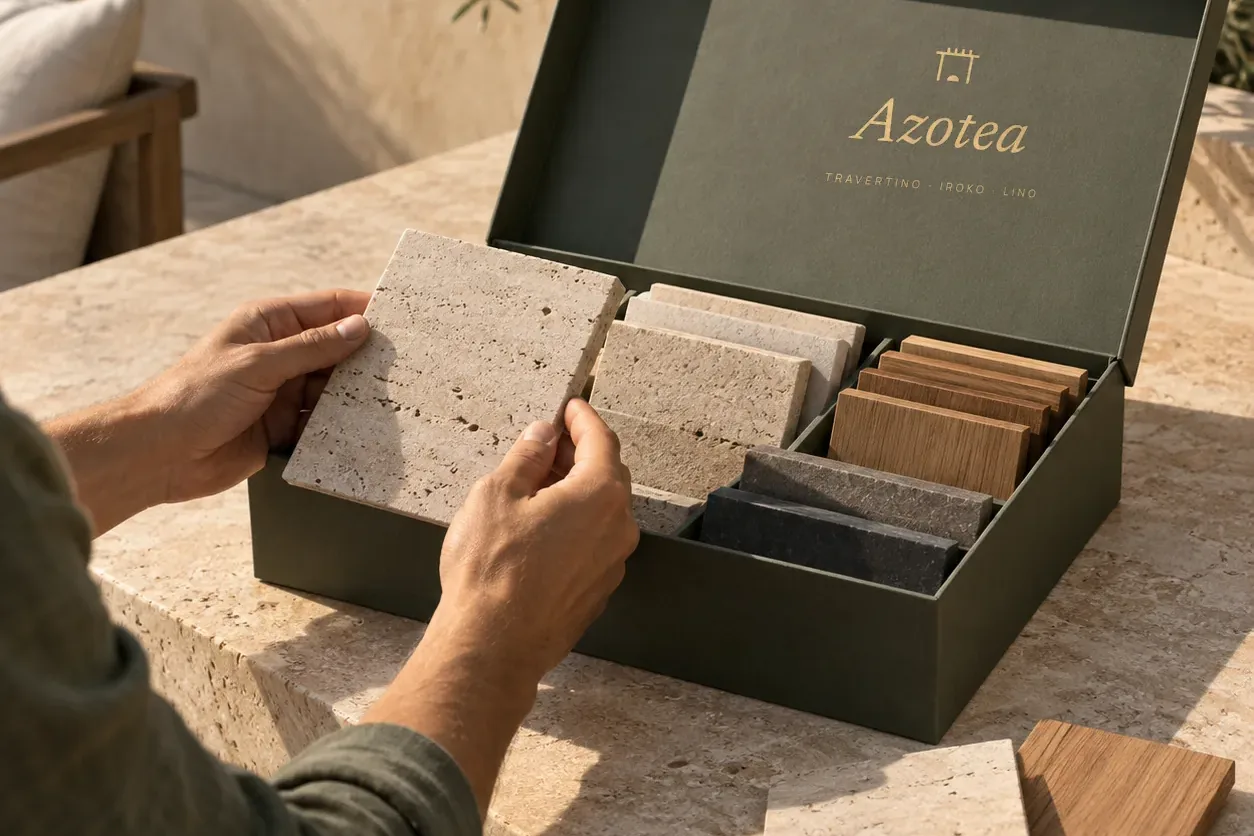
- The actual materials of the proposal. Not a generic range, but the stone, wood, fabric and finish chosen for this project.
- Pieces large enough. Big enough to show grain, veining and weave, and to hold against a wall or a floor at home.
- Labels that match the proposal. Each sample named and numbered as it appears in the drawings and the quote.
- A short note. Why each material was chosen, how it ages and how to care for it.
- A well-made box. Something clients will keep on a table and show their partner, not a padded envelope.
It works after the sale too
A sample box keeps everyone honest. Contractors, suppliers and clients can all check what was agreed against something real. When the project is finished, the box becomes a record of the choices made, useful for repairs or extensions years later.
People decide with their hands. Give them something to hold before you ask them to sign.
If your proposals are mostly PDFs today, send a sample box with the next large one. The cost is small next to the project, and the conversation that follows is often much shorter.
Related project: AZOTEA, sample boxes, proposals and website for an outdoor living company in Marbella.