Reports the next generation will read
FENCHWOOD's founders had served the same families for thirty years. The clients' children, now in their thirties, found the brand distant and the quarterly reports unreadable.
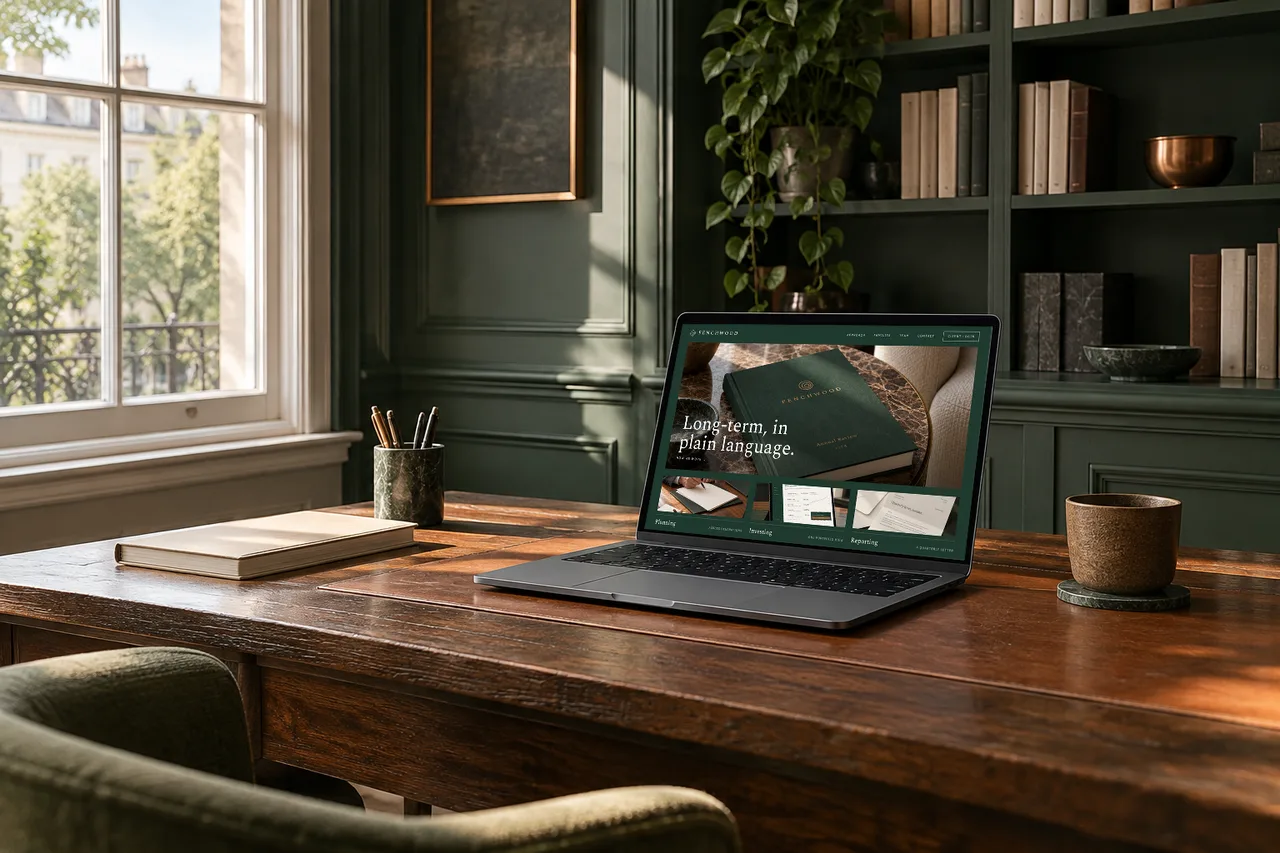
The report is the brand most clients see
For a wealth or family office firm, the website is visited rarely. The quarterly report arrives four times a year, every year, and it is read, or not read, at the kitchen table. If the next generation finds it impenetrable, that is how they will judge the firm, long before they need its advice.
Plain language, and a fixed order
The new reporting system rests on a few rules, and the brand follows them:
- Plain English. Short sentences, every term explained once. Four pages each quarter, written as a letter rather than a report.
- The same figures in the same order. Every quarter, in the letter and in the client portal. Familiarity builds understanding, and it makes change easy to see.
- Family access. In the portal, each family member sees what the family has agreed to share.
The position, long-term and in plain language, is more than a line. It describes how the firm reports, which is why clients believe it.
Respect the founders' clients too
Speaking to the heirs must not push away the people who built the relationship. The identity stays calm and serious: a mark of rings, one per generation, set slightly off-centre because growth is never even. The annual review book, family meeting invitations and stationery give the older generation the ceremony they expect; the letters give the younger one clarity.
The next generation does not need a younger-looking firm. It needs one it can understand.
Any firm that reports to clients can start here. Read your last report as a thirty-year-old who has never met your team. Every sentence they would skip is a sentence to rewrite. FENCHWOOD's project ended, after eighteen weeks, with the first quarterly letter in the new format.
See the full case: FENCHWOOD, brand, reporting and client portal for a family wealth firm.